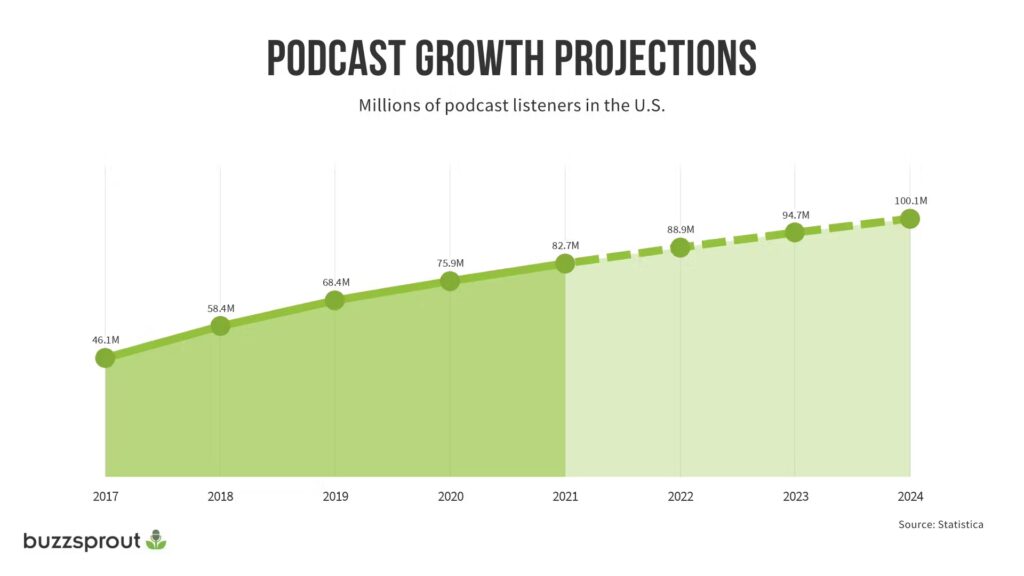
Podcasts are a popular and growing format of content consumption, with an estimated 584 million global podcast listeners in 2025. There’s no sign of the format slowing down either, with Netflix working with Spotify to introduce podcasts to their platform next year.
So as a B2B marketer, how can you use podcasts to maximise your reach and engage more potential customers? This post explores some of the key learnings from years of producing podcasts, and not just your usual list of best practices.
A bit of background; between the years of 2020 and 2024 we ran and hosted the Marketing Freaks podcast. In that time we recorded hundreds of episodes, gained tens of thousands of views per month, and interviewed brands including Krispy Kreme, Pepsi, Bloomberg, Marshall, AO and loads more.
This post is a collection of lessons learned from that time, and some of the key benefits we found for using podcasts as part of your B2B marketing strategy.
Want help with your podcast planning, strategy and production? Contact us here for a chat.

Expectations – before you do anything, get your expectations in line. Do not go into this thinking that a podcast will be a magic marketing silver bullet.
A great podcast will become a fantastic asset for the business, educating and entertaining new customers and positioning your team as true experts. However, it’s unlikely to be a direct lead generation tool, and the commercial return on your investment / efforts may take some time.
Additionally, if your audience is niche, don’t expect huge numbers. If you’re building a regular audience in a small niche, then that’s great!
Work out what you want or need to achieve before you start, and just make sure everyone is on the same page with a set of realistic expectations.
Networking and access – beyond growing our audience and building a loyal listenership, you might be surprised to hear that networking was our primary objective for running the podcast.
It really was a networking secret weapon, and ended up giving us access to people and brands that we would never have otherwise been able to get in touch with. Many of these people went on to become great friends of the agency and frequently recommend us to people within their networks.
If I ever needed to build a network from scratch in a new industry, the very first thing I’d do is set up a podcast!
Content and repurposing – possibly one of the best things a business can gain from a podcast is the sheer amount of content you get from each episode. With many brands struggling to produce enough content, this is a really big benefit.
As a minimum, you should be getting the audio episode, a video version, a set of short video snippets for social media, audio snippets for social, transcripts for blog posts and quotes for static images on social.
Considering recording an episode should take about an hour (when you nail down the process), and also that a lot of the repurposing edits can now be automated, this is a vast amount of content produced for the time put in.
Following the fad – this is a word of warning. If you’re considering a podcast for your business, take a moment to really ask yourself why.
Are you really trying to educate people in your sector or add value in a unique way, or are you just trying to start a podcast because it’s seen as a popular type of content? If you’re going to start a podcast, you must be a) willing to commit and b) coming from a genuine place.
So many brands and companies start a podcast and call it quits before they reach their 10th episode, which no one will really gain from.
Perhaps this section should have sat at the top of the article, but before you think about the business outcomes, think about what it is you have to offer. Or, you can always choose another easier to produce format.
Essentially, make sure there’s a good reason to start a podcast!
Audio is hard – what I mean by this is that it’s very, very difficult to get discovered a build an audience via your audio episodes.
As such, you really do need to commit to producing video AND transcripts for SEO purposes. Some people are able to run a successful podcast with audio episodes only, however you are going to dramatically increase your chances of success if you can produce both video and text content alongside it.
If you follow the advice above, you’ll be able to publish your podcast on YouTube (both longform and shorts), post clips on Instagram and TikTok, and increase your reach and potential audience in a very big way.
What you think is interesting might not be – this is a big one and one where most businesses fail.
Unlike an individual creator who typically starts a podcast because they want to talk about a topic they care about, most brands start a podcast because they want to promote their business.
Absolutely nothing wrong with that at all (we’re all marketers!), but what this means is that most business podcasts fall into the trap of being about themselves. They talk in their own language, about topics they think are interesting.
The net result of this is typically very low numbers and no traction. You must take the time to work out what your potential audience actually find interesting, and start planning around that. This might mean a tweak on your original ideas, but write and plan episodes for audience demand and not for satisfying your own internal plans.
If you need some help with your podcast, be sure to give us a shout and we’d love to see if we can help.