Making a profitable return on investment from paid media is getting harder, and for financial services companies and FinTech brands, this challenge is accelerated for a number of reasons.
But, challenging does not equate to impossible and with the right strategy, there is still plenty of profitable business to be done. So what are the key challenges relating to paid media and the financial sector, and why do so many struggle to make a good return?
I’ll make the reasonably obvious assumption that most people reading this have come for solutions and not to read a list of problems, so whilst this article does outline some key challenges, I’ll also provide a recommended solution for each one.
Let’s go!
Finding your audience
The first main challenge (as always!) is identifying and finding your audience. In the world of paid media, this means finding the best platforms to advertise on that in turn will give you the highest possible chance of attracting new customers.
The difficulty arises for two reasons; firstly that there is so much nuance involved. Most financial services / FinTech brands focus on specific areas of the market and therefore identifying hotspots for your specific audience can be tough. Get this wrong and you could potentially waste a fair bit of your marketing budget.
If you’re in B2B then LinkedIn is always a good first port of call, however if you are looking at running additional activities such as display, then you really have to be clear on what a good placement looks like and exactly what topics you need to be associated with.
Solution: Have a very clear view on your ICP and build your plan around it. Use tools such as Google’s Keyword Planner to see if there is demand on Google, but also look outside the box and try to identify other avenues such as trade publications selling display and any relevant channels on YouTube.
Costs
Financial related advertising has always been at the higher end of the cost bracket, and this makes getting a positive ROI from channels such as Google extremely difficult.
To take an example, if we look at the estimated costs for ‘online bank account’ and ‘online business bank account’ you can see the estimated costs below:

Take a look at the business related term above – that’s an estimated top of page bid of £70.48 in the UK. And this is far from the highest cpc’s we’ve seen.
Clearly your business will have different keywords you are chasing, and different niches will have different costs, but you get the gist. It’s not a cheap field to play in.
Solution: if you are going to advertise on Google Ads (and it’s well worth doing!) then there are a number of things you should do to keep your costs sensible.
Firstly, be extremely wary of automated campaign types such as PMAX. Typically, volume in this sector (especially B2B). This means that there’s usually not enough conversion data to help the platforms learn, and costs can go a bit wild.
Secondly, you must do thorough keyword research that assesses search volume and cpcs. By overlaying this data, you can start to identify pockets of search volume where estimated costs are lower. There is normally a space in the mid to long tail where this occurs.
Long sales cycles
Extended sales cycles can make marketing difficult. For starters, measurement becomes much harder due to the time lag between your efforts and when a sale occurs. Sometimes this can be a matter of months or years, so tying it all together is tough.
The second element to this is that longer sales cycles tend to be much more complex, with lots of touch points occurring before a lead even comes in. This could range from interactions on LinkedIn, attendance at events, personal recommendations and more. So knowing what truly is having an impact is no easy task.
Solution: There is no such thing as perfect when it comes to attribution. However, despite this rather frustrating reality, you should always attempt to build as clear a picture as you can.
If you can focus as much of your top of funnel activity on acquiring email addresses as possible, this will enable you to add some early data into your CRM and build more insight.
Additionally, have as many conversations as you can. Talk to customers, ask them how they found out about you, talk to your sales team, and generally act like a bit of a sleuth. Yes, this might be less scientific than looking at hard data, but remember this is about building a picture.
Compliance
You can almost hear the enthusiasm leaving the room.
We must as marketers remember that compliance exists to protect the business, and in turn they help to protect you. This is a good thing. However, we all know that this stage of the process can slow things down and stifle creativity.
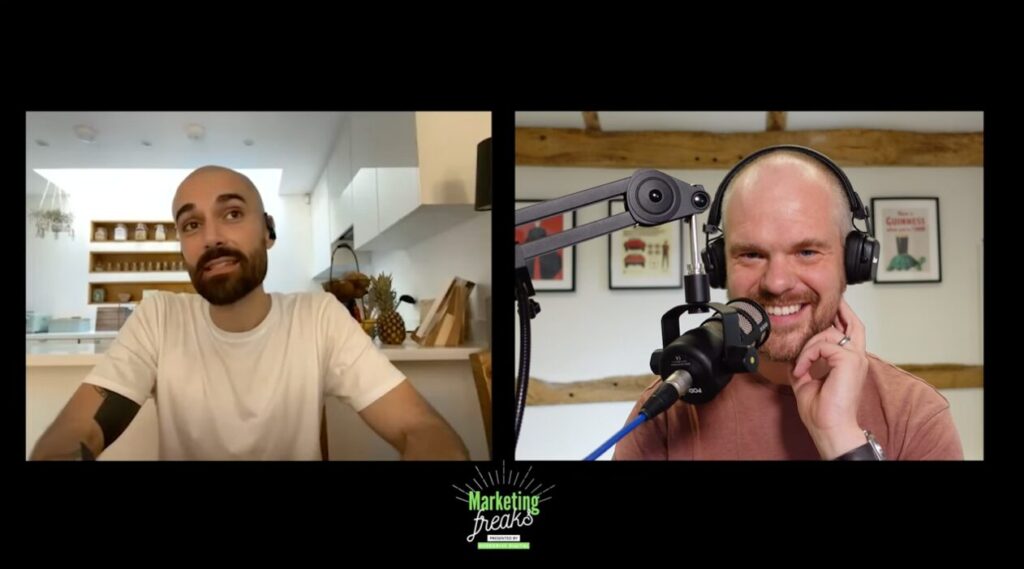
A couple of years ago we interviewed Duarte Garrido on the podcast, a wonderful guy who’s made a name for himself for working in highly regulated industries. If you’re struggling with this area, then definitely give this episode a listen as he imparts so much practical advice.
Solution: the biggest single thing you can do here is build a relationship. Speak to compliance (or whoever owns sign-off) and make sure they understand what you are doing, what you might want to expand into doing, and why you are doing it. Do this well ahead of time and your life will get far easier.
Another very useful thing to do is build banks (no pun intended) of creative well ahead of time. Write ad copy and ad copy variations before you need them. Design creative and content in advance. Essentially, build up a repository of variations you can dip into when you need to, knowing that everything has been approved for use. This means you can remain agile and test as you need to, without delay.
Being human
Jargon. The enemy of great B2B marketing, and something the financial sector seems to be inflicted with more than most.
So often we forget that no matter what we are trying to sell, or how professional our service is, at the end of the day we are still marketing to human beings. It’s far too easy to look at customer profiles and see lists of company names, revenue thresholds, and job titles.
Take a five minute browse through the LinkedIn Ads library and you’ll see the extent of the issue. So many companies present themselves and their content in a dry corporate manner, completely failing to connect with the human being on the other side of the screen.
Solution: always consider who it is you are trying to attract or engage with, and identify what they care about the most. Talk to sales, talk to your customers, get feedback and understand what real and current pain points you can address. Speak directly to these points.
When it comes to creative, don’t be afraid to do something different (within what can be approved of course). Try and find ways to visually be a bit more human. Look at the B2C world for inspiration and see how you could potentially translate this into your world.
I hope this has been useful, and if you ever want to chat about your campaigns we would love to help. Simply reach out here for a friendly conversation.