
A website can contain excellent content and still make it unnecessarily difficult for visitors and search engines to find the information they need.
For finance and fintech marketers, clear page structure, useful internal links and accessible content are important foundations for AI search visibility. They help establish what each page covers and how it relates to the rest of your website.
Why does website structure matter for AI search?
AI-powered search systems need to interpret page content, identify the main topic and retrieve relevant information. Clear headings, logical page layouts and descriptive internal links help establish that context.
Think of your website as a library. The quality of the information matters, but so does how easily people can find it.
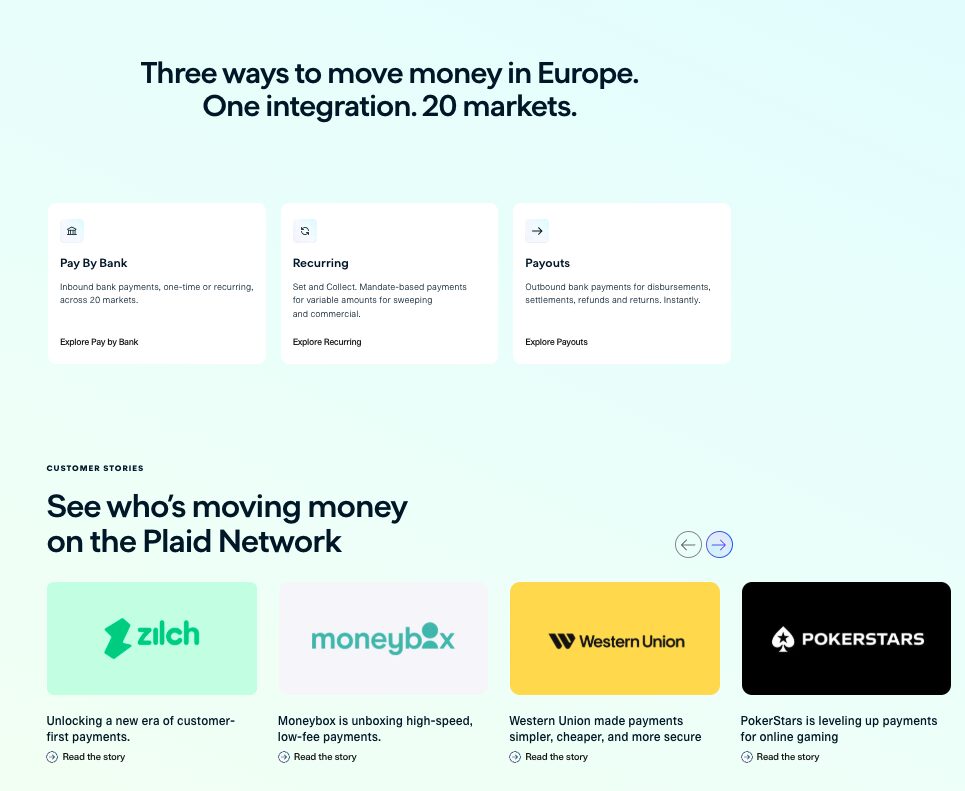
We’d like to highlight Plaid as an example of a finance technology brand whose website structure demonstrates several useful principles: FAQs, clear headings, structured page layouts and strong internal linking.
What can finance marketers learn from Plaid?
Plaid’s approach provides a useful reference point for organising information across a specialist financial technology website.

The underlying principles can be applied to businesses of different sizes:
- Clear headings: each section communicates what it covers.
- FAQs: common customer questions have direct answers.
- Logical layouts: information follows a sensible hierarchy.
- Internal links: related topics are connected.
For example, a business lending website could link an article about invoice financing to supporting content about working capital, cash flow management and alternative business finance.
Those connections help visitors explore related questions and make the relationship between different pages clearer.
How should you structure finance content?
Use descriptive headings
Instead of a vague heading such as “The benefits”, explain precisely what the section covers.
For example, “What Are the Benefits of Treasury Management for Mid-Market Businesses?” establishes a more specific purpose than “Treasury Management Benefits”.
This type of question-led heading to illustrate how financial content can become more focused and easier to interpret.
Create useful FAQ sections
FAQs can address genuine questions about eligibility, pricing, product features, application processes and other customer concerns.
Keep answers accurate and concise, and ensure they reflect the information available on the rest of your website.
FAQ schema can help search engines interpret structured information, but adding it doesn’t guarantee enhanced listings or AI citations.

Strengthen internal linking
Connect relevant educational content, service pages and supporting resources.
Use meaningful anchor text that describes the destination. For example, “Read our guide to international business payments” gives more context than “click here”.
Review older articles as you publish new ones so relevant internal links are added in both directions where useful.

Build a logical page hierarchy
Organise content around your main products, services, audiences and areas of expertise.
A fintech business might separate educational resources about international payments from its product pages, while ensuring that relevant links connect the two.
This helps users navigate from understanding a problem to evaluating a solution.
Which technical SEO issues should you check?
Review whether important pages can be crawled and indexed, whether XML sitemaps are up to date and whether internal links point to the correct destinations.
Also assess mobile usability, page performance, canonical tags and structured data.
These checks won’t guarantee visibility in AI-generated answers, but they help remove barriers that could prevent your content from being discovered or understood.
How can you audit your website?
Start with your most important service pages and educational resources.
For each page, ask:
- Is the purpose clear from the title and headings?
- Does the content answer a specific customer question?
- Is the key information easy to find?
- Are relevant supporting pages linked?
- Can search engines access and index the page?
Then compare your content with the answers AI platforms provide to relevant buyer questions. Look for gaps in your coverage and information that competitors explain more clearly.
Why isn’t website structure enough on its own?
A well-organised website helps make your expertise accessible, but your own content is only one part of your wider digital presence.
In the next article, Why Digital PR Matters for AI Search in Finance and Fintech, we’ll look at how industry publications, LinkedIn discussions, Reddit conversations and other external references can support brand credibility.
For the complete framework, download The Finance Marketer’s Guide to AI Search.


